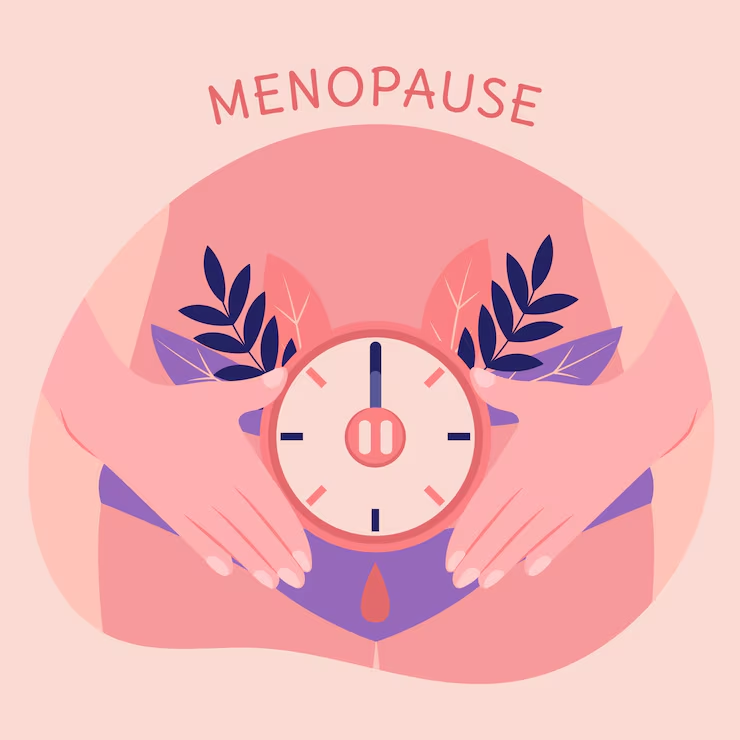
MENOPAUSE and it's Complications
October 05, 2026
What is Menopause?
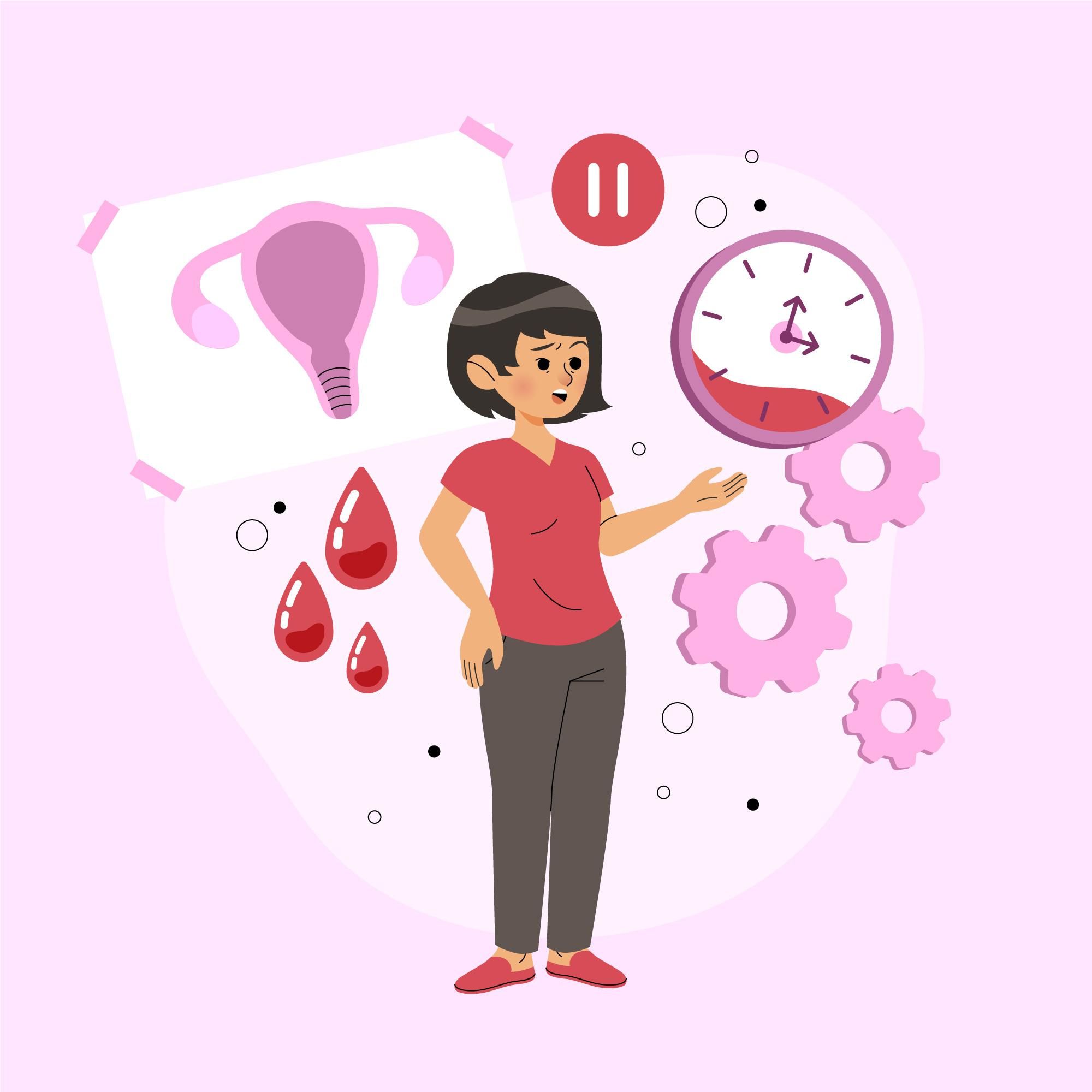
Menopause marks the natural end of a woman’s menstrual cycles. It is diagnosed after 12 consecutive months without a period and typically occurs between ages 45 and 55. It results from declining ovarian function and falling estrogen and progesterone levels.
The three stages
Stage
Perimenopause - The transition phase, with irregular periods and fluctuating hormones
Menopause - The point diagnosed after 12 months without a period
Postmenopause - The years following menopause, making up roughly a third of a woman’s lifespan
Common Symptoms
Hot flashes and night sweats
• Hot flashes are sudden waves of heat in the face, upper body, or whole body, often with flushing, sweating, and a racing heart. They last from 30 seconds to a few minutes and affect around 80% of women. They are usually most intense in the year around the final period and gradually ease afterward.
• Night sweats are the same phenomenon during sleep, often jolting women awake drenched in sweat.
Menstrual changes in perimenopause
Periods become irregular: closer together or further apart (often every 2 to 4 months in the 1 to 2 years before menopause), heavier or lighter, shorter or longer. Pregnancy is still possible during this phase, so a missed period should not be assumed to be menopause without ruling that out.
When to see a doctor Any bleeding after 12 full months without a period should be checked by a doctor.
Sleep disturbances
Difficulty falling or staying asleep, early waking, and fragmented sleep are common, and they are made worse by night sweats and anxiety. Studies suggest that a large majority of women (roughly 75 to 85%) notice reduced sleep quality during this transition, which in turn worsens daytime fatigue, concentration, and mood.
Mood and emotional changes
Irritability, tearfulness, anxiety, and low mood are common, and around 1 in 10 women notice a meaningful increase in these symptoms during the transition. Women with a prior history of depression are at higher risk of recurrence, and persistent poor sleep can itself raise the risk of depression.
Cognitive symptoms (“brain fog”)
Difficulty concentrating and forgetfulness are often secondary to poor sleep and lower estrogen. They are generally not a sign of dementia and tend to improve as the transition stabilizes.
Genitourinary symptoms
• Vaginal dryness, thinning of vaginal tissue, and discomfort or pain during sex, caused by reduced blood supply and tissue changes from low estrogen
• Increased susceptibility to urinary tract infections
• Urinary changes, including stress incontinence (leaking with coughing, sneezing, or lifting) and urge incontinence (sudden, frequent urges)
Sexual health
Reduced libido is common. It is tied to lower estrogen, along with the compounding effects of poor sleep, mood changes, and physical discomfort during sex.
Physical and metabolic changes
• Weight gain and a slower metabolism, often with fat redistributing to the abdomen
• Thinning hair, dry skin, and loss of breast fullness
• Headaches (more likely in women who had them with their periods)
• Breast tenderness (more common in early perimenopause)
• Joint aches
Silent changes you won’t notice
• Gradual bone density loss, which raises osteoporosis risk
• Rising cholesterol and increased cardiovascular risk
Long-Term Complications
Bone health and osteoporosis
Bone mineral density normally begins declining in a woman’s 40s, and the drop in estrogen at menopause affects bone strength, since estrogen helps build and maintain strong bone. This combination of aging and hormonal change can lead to osteoporosis, a deterioration in bone quantity and quality that raises fracture risk. It is sometimes called a “silent disease” because bone loss often has no symptoms.
Bone loss is typically most significant in the first five years after menopause. Roughly half of all women over 50 will eventually develop osteoporosis, and women account for about 80% of hip fractures.
Cardiovascular disease
After menopause, regardless of age, women face an increased risk of cardiovascular disease. This is largely driven by the decline in estrogen, which normally has a protective effect on the heart. The decline adversely affects cardiac risk factors, raising LDL cholesterol, lipoprotein(a), and homocysteine while lowering HDL cholesterol.
The exact reasons heart disease risk rises after menopause are not fully understood, and trials of estrogen therapy for heart disease prevention have not shown reduced cardiovascular outcomes.
Mood, metabolic, and weight changes
Weight gain and related metabolic disease, mood disruption, bone loss, genitourinary symptoms, hot flashes, and insomnia are all recognized menopause-related consequences. This matters because women spend roughly a third of their lives after menopause.
Genitourinary syndrome of menopause (GSM)
The vaginal walls become thin and dry, causing dryness, tissue shrinkage, and itching or burning that can make intercourse painful. Up to 84% of postmenopausal women struggle with chronic genital, sexual, and urinary symptoms that rarely resolve on their own without treatment. Urinary incontinence is also common at this stage.
Sexual dysfunction
Commonly reported issues stem from a mix of biological, psychological, and social factors:
Low sexual desire 40–55%
Poor lubrication 25–30%
Painful intercourse 12–45%
Mental health and cognition
Anxiety, depression, sleep disruption, and memory or concentration difficulties are more likely during the transition.
Oral health
Less commonly discussed, but estrogen deficiency during the menopausal transition can affect periodontal health, salivary function, and oral comfort.
Early menopause and other risk factors
People with autoimmune diseases, certain chromosomal conditions, or chronic fatigue syndrome may go through menopause earlier than typical. This can compound these risks by extending the low-estrogen period of life.
References
• National Institute for Health and Care Excellence. (2026). Menopause: Identification and management (NICE Guideline NG23).
• Medscape. (2025). Menopause guidelines: Guidelines summary.
• Healio. (n.d.). Menopause treatment guidelines.
• Magraith, K., Jang, C., & colleagues. (2023). Management of menopause. Australian Prescriber, 46(5), 148–154.
• Mayo Clinic. (n.d.). Cardiovascular risk in postmenopausal women.
• HealthyWomen. (2020). Menopause and chronic health risks.
• Alliance for Aging Research. (n.d.). Aging & health.
• CU OB-GYN. (n.d.). Effects of menopause. Colorado Women’s Health.
• Pfizer. (n.d.). Menopause overview: Types, causes, symptoms and treatment.
• Office on Women’s Health. (2025, March 12). Menopause and your health. U.S. Department of Health & Human Services.
• Let’s Talk Menopause. (n.d.). Long-term health concerns after menopause.
• HealthCentral. (n.d.). Menopause complications.
• Facing Our Risk of Cancer Empowered. (n.d.). Menopause symptoms and side effects. FORCE.
• Nappi, R. E., Cagnacci, A., & colleagues. (2019). Sexual health in menopause. Post Reproductive Health, 25(3), 141–149.
• Telles, M. M., & Ribeiro, E. B. (2024). Editorial: Menopause: Mood disorders and obesity. Frontiers in Endocrinology, 15, 1403692. https://doi.org/10.3389/fendo.2024.1403692
• Oral health across the menopausal transition. (n.d.). PubMed Central (PMC).
This document is for general information only and is not medical advice. Talk to a healthcare provider about symptoms and treatment options.

Innovating Healthcare, Transforming Futures:
Nepal Remedies, Your Partner in Hormonal and Steroids Excellence.